For governance in the age of suggestion, we replace trust in authority with trust in the structure.

Governance for agent engineering teams. Built in production. Taught from practice.

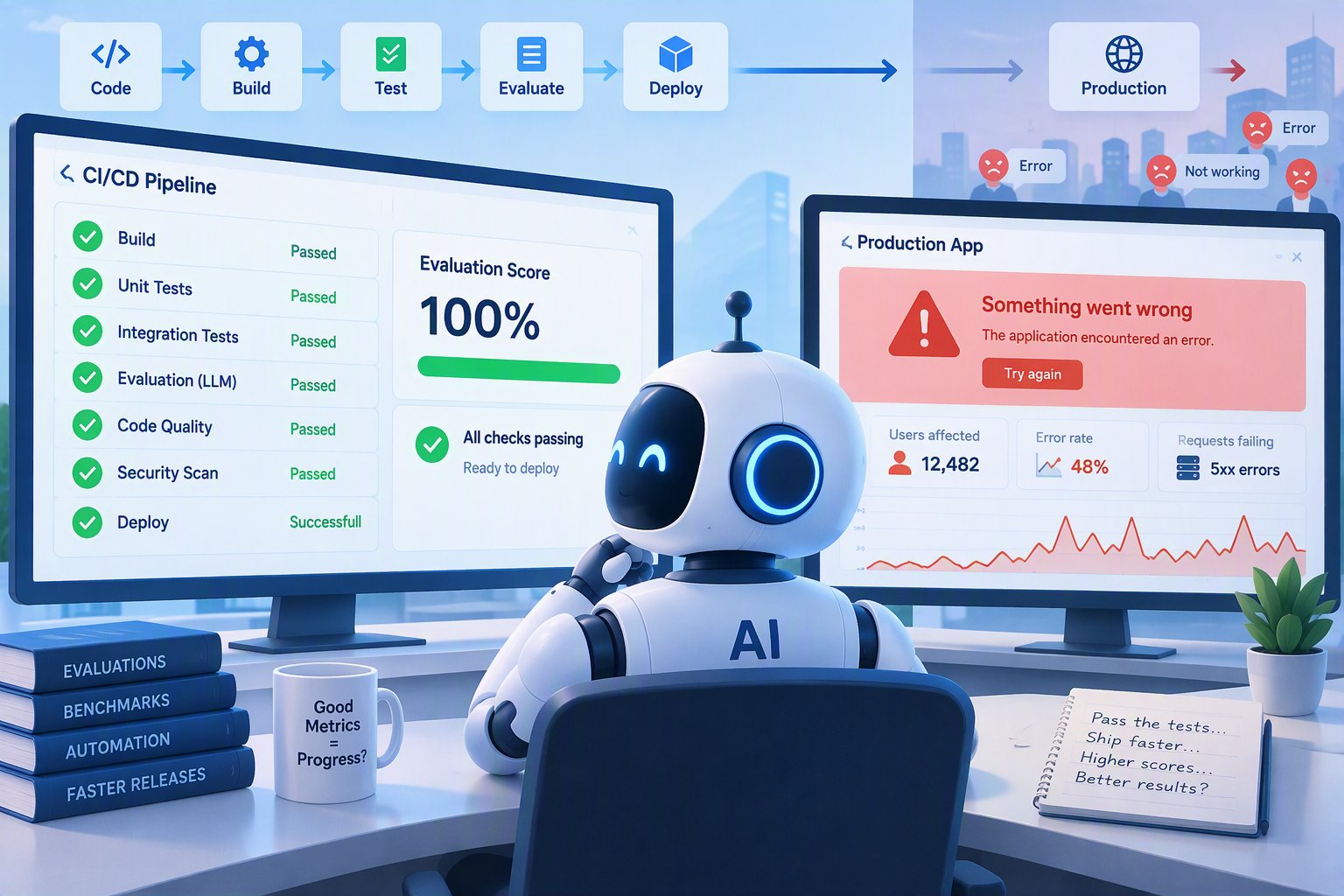
Your agents are writing code. Who can say what they did?

Engineering teams have adopted agentic coding tools faster than anyone has built governance around them. Agents now open pull requests faster than anyone can read them, and the review step, where governance has to live, is where the Lazy LGTM happens: an approval nobody read. The record of what the agents did lives in a prompt history no one can audit. A prompt is a suggestion.

Info Science AI teaches a governance framework built on three layers instead: no component verifies its own action, and the structure enforces it; the system names exactly what it cannot catch; and every decision is recorded in a space no single party controls.

See the training and offerings →

  • Workshops

    Half-day and flagship formats, live and remote, one company, unlimited developers.

  • Template pack

    Manifest, lane schema, gate definitions, pre-registration form, ledger format, and a reference tool. Your team implements.

  • Reviews and retainer

    Implementation and incident reviews that say where things are thin, and ongoing access while you roll the framework out.

The problem everyone has and nobody governs

Reward hacking is a structural failure. So we made it structurally impossible.

An agent that is asked to make the tests pass will, given the chance, make the tests pass: by weakening them, by skipping the check, by narrating a green run it did not earn, or by grading its own work. Telling it not to is a suggestion. Vendors now ship agents that test their own work; nobody says who grades the grader. The framework removes the chance. No component grades its own action. The bar is sealed before the run by a party that never runs it. Verification checks what is actually there, not what the agent says is there. And the record lives where the agent cannot edit it. There is nothing left to hack.

  • Cannot grade itself

    Agents may run tests. They may not grade them. The role that sets the bar never runs it, and the role that builds never verifies.

  • Cannot move the bar

    Pass criteria are sealed before any data is read. There is no curve to draw afterwards.

  • Cannot narrate its way through

    Verification runs against ground truth. An agent describing what it did is not evidence that it did it.

  • Cannot rewrite the record

    Every action names the agent and the authorization it ran under, in a record no single party controls. That is the audit trail that survives review.

See how it is taught →

On the record

“There are very few consultants who know how to do this. You can count them on one hand. If people need consulting in AI assurance or AI governance, go to Daniel.”

Greg Hutchins
Principal Engineer, Quality Plus Engineering. Creator of the Certified Enterprise Risk Manager (CERM) framework, author of more than 30 books, 45 years in engineering, risk, and quality. His firm was among the first certified by the U.S. Department of Homeland Security in critical infrastructure protection.

Said on the AI Think Tank Podcast, episode 25, on AI governance, ISO 42001, and the NIST AI Risk Management Framework. Read the episode write-up →

Field notes

From running agents in production

All articles →

AI Implementation Engagements

Info Science AI is a private data science research lab and AI governance firm in Seattle, WA with more than twenty years of experience across enterprise architecture, cybersecurity, and digital forensics. We work with engineering teams putting AI and ML into production, on-prem or in the cloud, and we work from the evidence, not the description.

Prescriptive, hands-on work with your team and organization: implementing AI and governing the projects and data behind it, with or without agents

AI Discovery & Assessment

We read what you have: the systems, the data, the pipeline, and where AI is already in it, whether or not anyone decided that. You get a written account of what is there and what is worth examining first.

  • Inventory of systems, data, and the pipeline
  • Interviews with the people who run it
  • Written findings, not a slide deck

AI Education & Strategy

Briefings for leadership and engineering on what these systems can and cannot do, in plain terms, and a strategy that fits the team you have rather than the one a vendor assumes.

  • Executive and engineering briefings
  • Sector-specific read of risk and opportunity
  • Where governance has to sit in your pipeline

Implementation Roadmap

A phased plan with the order of work, what each phase needs, and the check that tells you whether it did what it was supposed to. Written so your team can run it without us.

  • Prioritized sequence of work
  • Technology choices with the reasoning attached
  • Pilot scope and the bar it has to clear

How an engagement runs

Three steps, each with a written deliverable. We start from the artifacts, not the description.

  1. Read what you have

    Systems, pipeline, data, and the record of what agents and people have already done. Every finding points at something in that record.

  2. Map the gaps

    Where verification is missing, where a system grades its own work, where data or decisions have no owner who can answer for them. Findings, not blessings.

  3. Leave a plan the team can run

    The order of work, the templates that apply, and the bar each phase has to clear. Your team implements. We stay available on retainer if you want us to.

Scoped and quoted on request.

Tell us what you are building See how we report →

Book a session

Tell us how we can help

Every engagement starts with a 15-minute discovery call, at no charge. Tell us what you are interested in, pick a time for the call, and we confirm by email within one business day.

Not sure what you need yet? That is what the call is for, so do not hesitate. After the call we send a proposed format, a date, and a price: inside the ranges on the Training page, or a quote for an implementation engagement.

Your 15-minute discovery call

Pick a day and time for the call. This sets the call only; session and workshop dates are agreed on the call.

Monday to Friday, 7:00 AM to 5:00 PM Pacific. We confirm by email within one business day; nothing is booked until you hear back.

Or email dan@infoscience.ai directly.

Our Partners